
If you may need a Transverse Tibial Transport, please schedule an appointment with one of our foot and ankle specialists as soon as possible.
What is Transverse Tibial Transport?
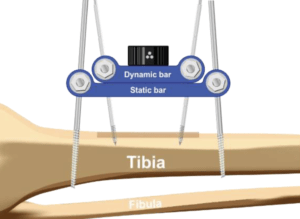 Transverse Tibial Transport (TTT) serves as an advanced limb-salvage procedure that helps patients with severe foot wounds, diabetic foot ulcers, poor circulation, gangrene, and peripheral arterial disease. When blood flow to the foot and ankle decreases, wounds can heal slowly and may increase the risk of infection, tissue loss, and amputation.
TTT works by stimulating new blood vessel growth and improving circulation to the lower leg and foot. Using an external fixation device, a surgeon carefully moves a small section of the tibia (shin bone) to activate the body’s natural healing response. For patients who have not achieved healing with traditional wound care or vascular treatments, TTT may offer another path toward wound healing and limb preservation.
What Conditions Can Be Treated with a Transverse Tibial Transport?
Specialists consider Transverse Tibial Transport for patients with severe or complex lower-extremity wounds, especially when poor circulation prevents healing. Common conditions include:
- Peripheral arterial disease: Narrowed or blocked arteries reduce blood flow to the legs and feet and slow wound healing.
- Chronic limb-threatening ischemia: Severe circulation loss causes rest pain, non-healing wounds, ulcers, and gangrene.
- Gangrene: Poor blood flow causes tissue death.
- Diabetic foot ulcers: Diabetes damages nerves and blood vessels and increases the risk of chronic wounds and infection.
- Non-healing foot or ankle wounds: Wounds that remain open for weeks or months may require advanced limb-salvage treatment.
- Ischemic ulcers: Reduced oxygen-rich blood supply leads to tissue breakdown and open wounds.
- Complex post-infection or post-surgical wounds: Some wounds persist despite antibiotics, debridement, or standard wound care.
Symptoms of a Transverse Tibial Transport
Patients with circulation-related foot and ankle wounds may experience pain while walking, cramping in the calf or foot, numbness, coldness, or changes in skin color. Some patients also develop blisters, sores, or ulcers that heal slowly. By recognizing these symptoms early and seeking specialized care, patients can explore advanced treatment options that support healing, improve circulation, and help preserve limb function.
Symptoms may include:
- A wound on the foot, ankle, or toes that does not heal
- Black, blue, purple, pale, or discolored skin
- Gangrene or dead tissue
- Pain in the foot or leg while resting
- Increased pain when lying flat
- Coldness in one foot compared to the other
- Drainage, odor, redness, swelling, or warmth around a wound
- Numbness, tingling, or loss of sensation
Patients should seek urgent medical care if they notice spreading redness, fever, chills, worsening drainage, rapidly darkening tissue, severe pain, or signs of infection. These symptoms can indicate a limb-threatening condition that requires prompt treatment.
How a Transverse Tibial Transport Works
Transverse Tibial Transport relies on the principle that controlled bone movement stimulates tissue regeneration and promotes new blood vessel formation. During the procedure, the surgeon creates a small, carefully planned section of bone in the tibia. An external fixation device gradually moves the bone segment in a controlled side-to-side direction. This process encourages the body to form new blood vessels and improve blood flow throughout the lower leg and foot. Improved circulation helps deliver oxygen and nutrients to wounds, supporting healing. Depending on the patient’s condition, treatment may also include wound care, debridement, infection control, offloading, vascular evaluation, antibiotics, imaging, and close follow-up with a foot and ankle specialist.
Recovery for a Transverse Tibial Transport
Recovery after TTT requires active patient participation and close follow-up care. Patients must follow instructions for pin-site care, wound care, device adjustments, weight-bearing restrictions, and scheduled appointments to support healing. TTT improves circulation, promote wound healing, reduce the risk of infection, preserve function, and help eligible patients avoid major amputation.