
Rolando Fracture Fixation
If you need a Rolando Fracture Fixation, please schedule an appointment with one of our orthopedic specialists as soon as possible.
What is a Rolando Fracture Fixation?
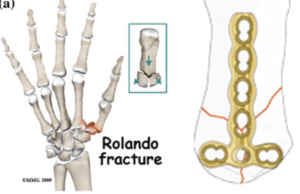 A Rolando fracture fixation refers to a surgical procedure that repairs a Rolando fracture, a complex break involving the base of the thumb’s first metacarpal bone. Surgeons perform fixation to restore proper bone alignment, stabilize the thumb joint, and preserve hand strength and motion. This type of fracture usually results from high-impact injuries, such as falls, sports accidents, or motor vehicle collisions, and often produces multiple bone fragments that require surgical repair.
Surgeons may use plates, screws, pins, wires, or external fixation devices to hold the fractured bone fragments in place while healing occurs. After surgery, patients typically wear a splint or cast for several weeks before beginning hand therapy to improve flexibility, strength, and function. Early treatment and guided rehabilitation help reduce pain, support bone healing, and lower the risk of long-term complications such as joint stiffness, weakness, or arthritis.
Types of Rolando Fracture Fixation
Rehabilitation and Recovery
Recovery from Rolando fracture fixation encompasses several stages, each crucial for optimal healing and rehabilitation. Following surgery, patients typically experience pain and swelling, which specialists manage with pain medications and elevation of the affected hand. Immobilization with a cast, splint, or external fixation device is often necessary to support the healing process and maintain alignment. Physical therapy initiates once the initial healing phase concludes, focusing on regaining range of motion, strength, and function in the hand and thumb. Therapy incorporates exercises, manual techniques, and modalities such as heat or cold therapy. As recovery advances, gradual reintroduction of daily activities and functional tasks is encouraged. Full recovery may span several months, contingent on the fracture’s severity and individual healing response. Regular follow-up appointments with specialists are crucial to monitor progress, address any complications, and adjust the treatment plan as necessary.
If you would like to seek care from a Dallas or Fort Worth Hand Surgeon, give us a call at 817-697-4038, or contact us online. Telemedicine appointments are also available.