SKIN GRAFT
If you have suffered from an injury or condition that resulted in damage to your skin, don’t hesitate to Schedule an appointment with one of our providers to see if a skin graft may help you.
What are Skin Grafts?
 A skin graft transfers healthy skin from one part of the body to a damaged or missing skin area. Surgeons remove a section of skin from a donor site, often from the thigh, buttock, or forearm, and place that tissue over a wound that cannot close on its own. The graft covers exposed structures, protects underlying tissue from infection, and creates a surface that supports new skin growth.
What do Skin Grafts Treat?
This procedure treats damaged skin that cannot properly heal on its own and help people who have skin loss due to:
- Burns
- Infection
- Surgery to remove skin cancer
- Skin ulcers and bedsores
- Slow-healing wounds
- Large wounds
Skin Graft Treatment
Surgeons perform a skin graft procedure by first preparing the wound bed and removing dead or infected tissue to create a clean surface for healing. They harvest healthy skin from a donor site using a scalpel or dermatome, then place that tissue over the prepared wound. Surgeons secure the graft with sutures, staples, or dressings to keep firm contact between graft and recipient site, which supports blood vessel growth and tissue integration.
After placement, care teams monitor the graft closely to ensure proper attachment and blood supply development. Dressings protect the area from movement, pressure, and contamination during early healing. Patients follow strict wound care instructions and avoid strain on both donor and recipient sites while new blood vessels connect the graft to surrounding tissue. Over time, the graft stabilizes, and follow-up care focuses on scar management and restoration of normal skin function.
Recovery After a Skin Graft
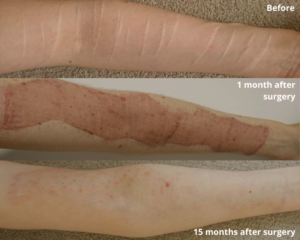 Recovery after a skin graft focuses on protecting the graft site while supporting revascularization and tissue integration. Care teams keep the graft immobilized with dressings or splints to prevent movement that could disrupt attachment. Regular wound care maintains a clean environment and reduces infection risk while clinicians monitor color, temperature, and capillary refill to assess blood flow to the graft. Patients avoid pressure or friction on the area during early healing to allow stable connection between graft and underlying tissue.
Later recovery emphasizes scar management, mobility restoration, and gradual return to normal activity. Physical therapists guide patients through gentle range-of-motion exercises to prevent stiffness near the graft site while avoiding strain on healing tissue. Moisturizing, massage, and silicone-based treatments help improve scar appearance and flexibility. Over time, patients rebuild strength and function while protecting the grafted area from excessive sun exposure or trauma to support long-term skin durability.
If you have any questions for our Texas based orthopedic specialists, give us a call at 817-697-4038, or contact us over the web. Tele-medicine appointments are also available.
If you would like to speak to one of our providers in North Texas, give us a call at 817-697-4038, or contact us over the web. Telemedicine appointments are also available.